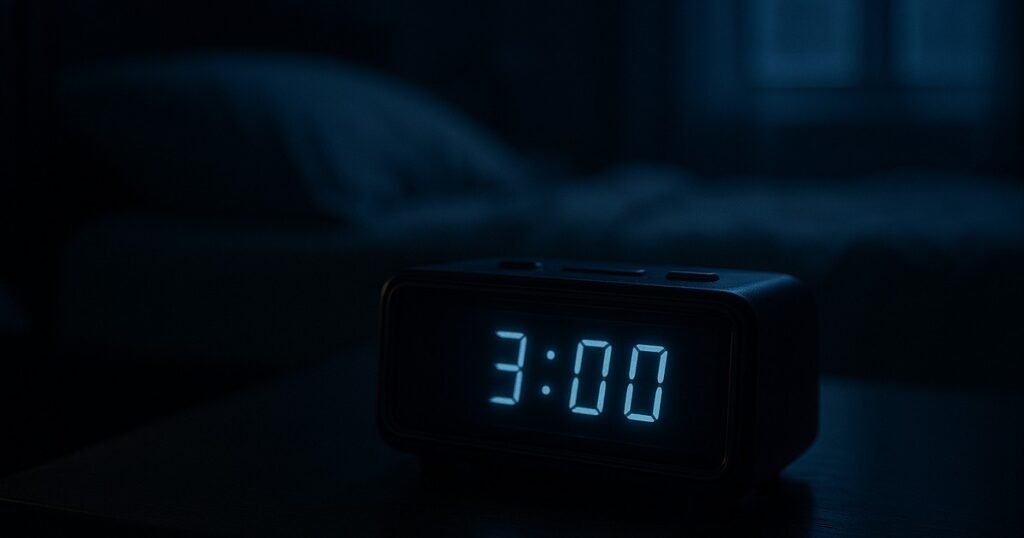
3:07 a.m. Again. You didn’t drink coffee after noon. You didn’t scroll your phone in bed. You did everything “right,” and you’re still staring at the ceiling, wide awake, doing math about how many hours of sleep you have left before the alarm goes off.
Here’s the part nobody tells you: waking up in the middle of the night isn’t random, and it isn’t a willpower problem. It’s usually one of a small number of physiological triggers — and once you know which one is yours, it’s fixable.
Quick answer: Waking up around 3 AM is most often caused by a dip in blood sugar or a cortisol spike, alcohol metabolizing out of your system, stress-driven light sleep, or an overheated/overstimulating bedroom environment. The fix isn’t “try harder to fall back asleep” — it’s addressing the specific trigger and using a structured response (like the 20-minute rule below) instead of lying there fighting it.
What’s Actually Happening in Your Body at 3 AM

Your body naturally moves through lighter and deeper sleep stages throughout the night.
Sleep isn’t one continuous state. You cycle through lighter and deeper stages roughly every 90 minutes, and by the middle of the night, you’re spending more time in lighter sleep and REM — which means it’s naturally easier to wake up around this window (Sleep Foundation, “Interrupted Sleep: Causes & Helpful Tips”). The problem isn’t that you wake up briefly; it’s when something keeps you awake once you do.
1. Alcohol Is a Bigger Culprit Than You Think
A drink to “unwind” often backfires a few hours later. A 2025 systematic review and meta-analysis of 27 studies by researchers at Australian Catholic University found a clear dose-response relationship: even low-dose alcohol (about 2 drinks) reduced REM sleep, and higher doses shortened the time it took to fall asleep but significantly worsened sleep disruption later in the night (PubMed, “The effect of alcohol on subsequent sleep in healthy adults,” 2025). As your body metabolizes the alcohol, a “wakeful rebound” effect and increased bathroom trips are common — which lines up almost exactly with a 2-4 a.m. wake-up if the drink was with dinner.
Try this: If you drink, keep it earlier in the evening and notice whether your 3 a.m. wake-ups track with the nights you had a drink.
2. A Blood Sugar or Cortisol Dip
Your body naturally raises cortisol slightly overnight to prepare for waking — but a sharp dip in blood sugar can trigger that release too early, jolting you awake. This link is best documented in people with diabetes: a 2025 case-control study found a measurable relationship between early morning cortisol and nocturnal hypoglycemia in insulin-treated adults (PMC, “Cortisol as a Predictor of Nocturnal Hypoglycemia in Insulin-Treated Diabetes,” 2025). If you’re not diabetic, the mechanism can still apply in a milder form, especially after a low-protein dinner or a high-sugar dessert late at night.
Try this: Eat a dinner with adequate protein and fiber rather than a carb-heavy meal right before bed, and see if that changes your wake-up pattern.
3. A “Wired but Tired” Stress Response
If your mind starts running through your to-do list the second you open your eyes, that’s your sympathetic nervous system, not your bladder or your blood sugar. Chronic stress keeps you cycling in lighter sleep stages where you’re more easily disturbed, and once you’re awake, elevated cortisol makes it harder to drift back off.
4. Your Bladder, Your Room, or Your Screen
Sometimes it really is simple: a bedroom that’s too warm, a full bladder, or a phone check that turns into 20 minutes of scrolling. Keeping your room at 60–67°F (15–19°C), cutting fluids about 90 minutes before bed, and physically leaving your phone in another room removes three of the most common reasons a normal 3 a.m. arousal turns into a 45-minute wide-awake session.
5. What Actually Works: The 20-Minute Rule

A simple, low-stimulation nightstand routine supports the 20-minute rule.
This is the single most effective technique from cognitive behavioral therapy for insomnia (CBT-I), and it’s backed by strong recent evidence. Multiple 2025 randomized controlled trials on digital CBT-I — including a nationwide U.S. trial of the FDA-cleared program SleepioRx — found statistically and clinically significant improvements in insomnia severity that held up at 16 and 24 weeks (JMIR Mental Health, “Digital CBT to Treat Insomnia Disorder in US Adults,” 2025). A separate trial in older adults using the SHUTi OASIS program showed similar sustained results over 12 months (npj Digital Medicine, 2025).
The core principle: if you’re not asleep within about 20 minutes of waking, get up. Go to another room, keep the lights dim, and do something quiet and boring (not your phone) until you feel sleepy again, then go back to bed. Lying in bed awake trains your brain to associate the bed with wakefulness — getting up breaks that association.
6. When It’s a Red Flag, Not Just a Habit
If you wake up gasping or choking, snore loudly, need to urinate multiple times every single night, or have chest discomfort or heartburn that coincides with waking, these can point to sleep apnea, an overactive bladder, or acid reflux — conditions that need a medical evaluation, not just better sleep hygiene.
Frequently Asked Questions
Why do I always wake up at exactly 3 AM?
There’s no universal “3 a.m. clock,” but this window often lines up with lighter sleep stages, alcohol metabolizing out of your system, or an overnight cortisol/blood sugar shift — which is why the same time tends to repeat for a given person.
Is waking up at night normal?
Brief awakenings are a normal part of the sleep cycle. It becomes a problem specifically when you can’t fall back asleep within a reasonable time, which is what techniques like the 20-minute rule are designed to fix.
Does alcohol really cause middle-of-the-night waking?
Yes. A 2025 meta-analysis of 27 studies found a clear dose-response relationship between alcohol and disrupted sleep later in the night, even at low doses.
What should I do if I wake up and can’t fall back asleep?
If about 20 minutes pass without falling back asleep, get out of bed, keep lights low, and do something calm and non-stimulating until you feel sleepy, then return to bed. This is a core CBT-I technique with strong 2025 clinical trial support.
When should I see a doctor about waking up at night?
See a doctor if you wake up gasping or choking, snore heavily, need to urinate several times nightly, or have symptoms like heartburn or chest discomfort at night — these can indicate a treatable medical condition.
The Bottom Line
Waking up at 3 a.m. usually has a specific, identifiable trigger — alcohol, blood sugar, stress, or environment — and each one has a specific fix. The worst thing you can do is lie there fighting it. Give yourself 20 minutes, and if sleep doesn’t come back, get up and reset instead of stewing in frustration.
This article is for educational purposes only and is not a substitute for professional medical advice, diagnosis, or treatment. Consult your physician if nighttime waking is frequent, severe, or accompanied by symptoms like gasping, loud snoring, or chest discomfort.